
Timor-Leste Samoro
Couldn't load pickup availability
Pickup available at Mill Bank Coffee Co.
Usually ready in 24 hoursPairs well with
Unique and flavourful community coffee from the Ermera municipality of central-eastern Timor-Leste.
Roast: Full City (4/7) (Medium)
Tasting Notes: Dark Chocolate, Pomelo, Fruit Pastilles
Altitude: 1500-1600 MASL
Variety: Typica, Timor Hybrid
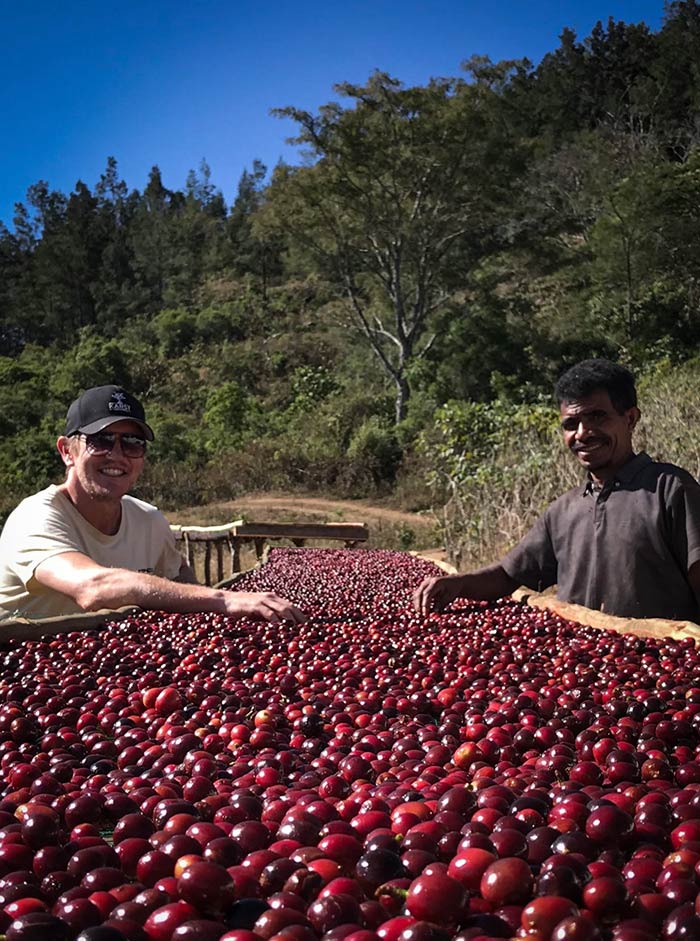
Processing Method: Fully Washed and African bed/Tarpaulin dried
Timor-Leste Samoro
If you have any questions, you are always welcome to contact us. We'll get back to you as soon as possible, within 24 hours on weekdays.
-
Shipping Information
We try to prepare and dispatch your order within 24 hours of receiving your order (Monday-Friday). On rare occasions this may take up to 2-3 working days.
All orders are shipped out through Royal Mail Tracked Services with Tracked 48 for Standard and Tracked 24 for Express.
Generally, when using Standard please allow 3-4 working days from placing your order to receiving it.
-
Got a question?
Get in touch with us through the Contact Us page or email us directly at info@millbankcoffee.co.uk.
Facts
SCA Score
Altitude
Story
Situated in South East Asia with Australia to the South, Timor-Leste holds the unenviable accolade of being one of the few countries in the world to have been both colonised and annexed; colonised by Portugal from 1600s to 1975 and annexed by Indonesia from 1975 to 1999. Having finally gained independence in 2002, Timor-Leste is the world’s fourth youngest nation-state and still finding its feet in the geo-political world of the 21st century. Coffee was introduced to the island by the Portuguese and went on to become the country’s leading export by the 1900s, however, the industry suffered greatly during the years of Indonesian annexation when this sector was largely ignored. Fast forward to the present day, around 1/3 of all Timorese households grow coffee and you will see that the coffee farmers of Timor-Leste are working hard to collectively carve out a place for Timorese coffee in the global speciality coffee market.[44][46]
Timorese coffee is truly wild and organically grown underneath the imposing shade trees that dominate the landscape. With time-old traditions in processing coffee, passed on from generation to generation, coffee is helping to build up more opportunities for Timorese people to create a consistent and sustainable income from which to support and provide for their families and the local community.[44]


Of the 13 municipalities in East Timor, Ermera is said to produce almost half of the nation’s coffee. With high elevations, varied soils, and ideal growing conditions, it provides the perfect environment for exceptional coffee. Samoro is located in the south-eastern part of Letefoho, under the watchful eye of Timor-Leste’s most sacred mountain, Mount Ramelau, and is made up of 11 farmers led by Orlando Soares.
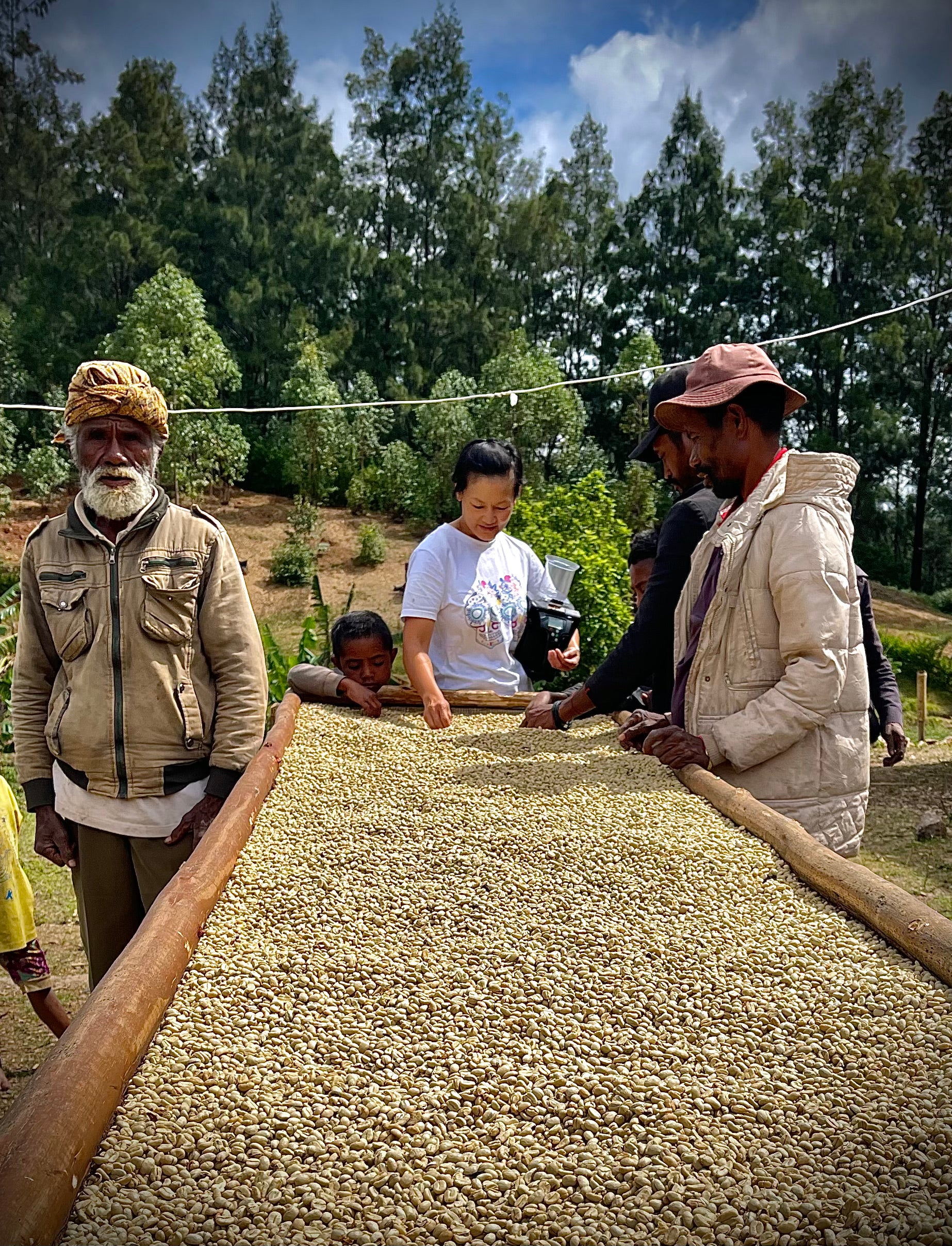
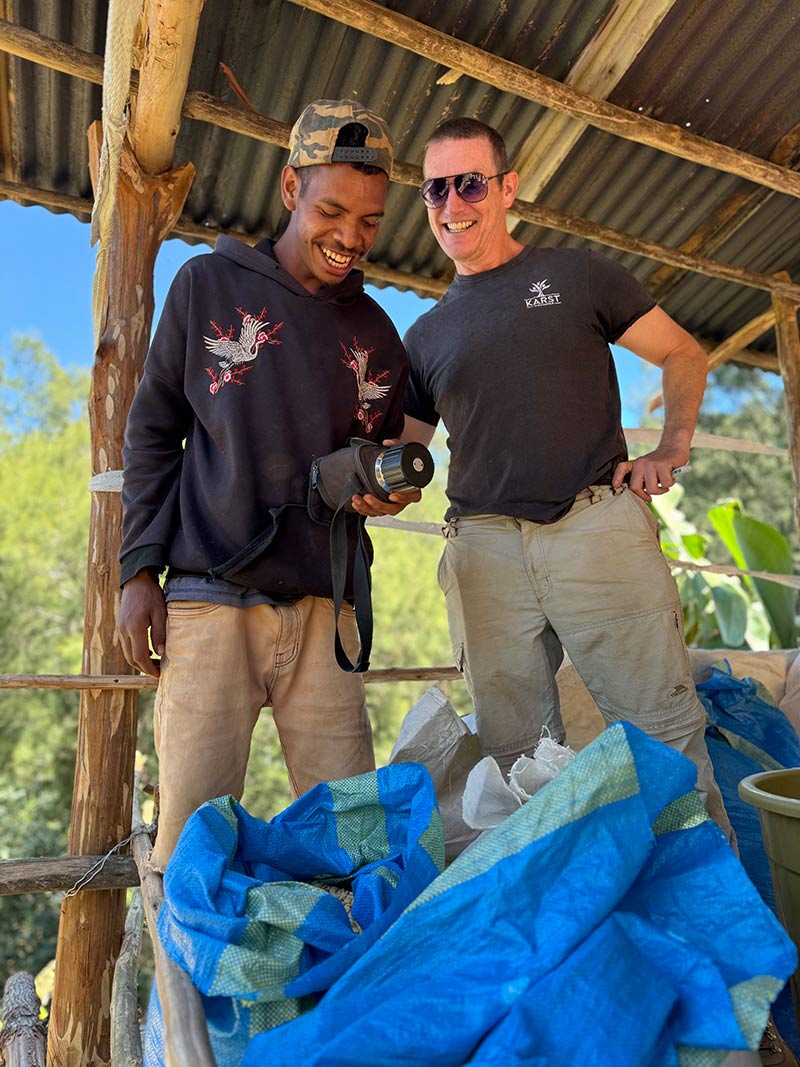
Karst has now worked with the Samoro community for four consecutive years, and it has been brilliant to see both quality and confidence continue to grow. Each farmer processes their fully-washed coffee individually at home, using traditional methods passed down through generations. As the reputation of Samoro’s coffee has developed, so too has the volume purchased and the income returning directly to the community, showing just how valuable high-quality specialty coffee can be.
The 2025 harvest was an especially strong one, and the resulting cup is another excellent example of Timorese coffee at its best. Roasted medium-light, it brings together bright sweetness and structure, with notes of fruit pastilles, pomelo, and dark chocolate.
Meet the Importers
This coffee is imported by Karst Organics. Run by Stewart and Kar-Yee, they first began working in East Timor in 2017. With Stewart’s background in education and capacity-building and Kar-Yee's background in business, it provided a perfect foundation for implementing and improving coffee farming and processing techniques, such as selective picking and documenting fermentation/drying practices.[47] They have and continue to work with the farmers at origin by spending 6 months of the year living in East Timor throughout the harvest season. Their work to date has included:
- Funding the construction of a new centralised processing facility in 2018 for their Rotutu cooperative
- Supporting the installation of new water pipes to the centralised processing plant for improved water supply. This allows for greater consistency during processing and also provides some houses within the local community with access to a direct water source
- Collaboration with the Associasaun Café Timor (ACT) to provide training programs around quality coffee processing and coffee cupping to enable farmers to have a better understanding of their product and how different methods affect the final flavour of the coffee
- Consistent reinvestment into new equipment and the local community to expand their team of locally employed staff and increase the volume of coffee purchased.[48]
Learn More
Karst Organics
If you would like to learn more about Karst Organics and the work they do at origin, you can do so on their website
Sustainable Farming
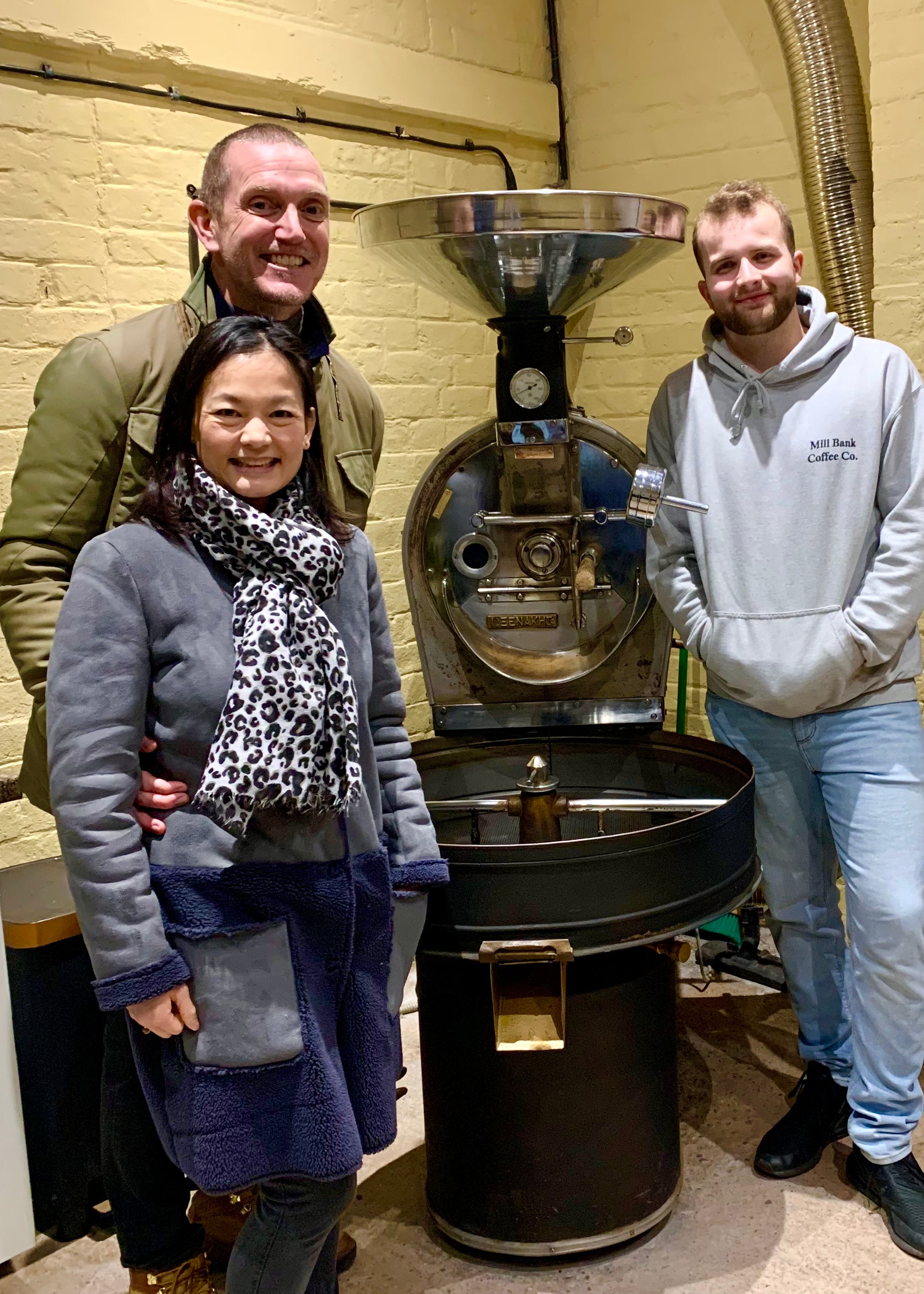
We were very lucky to host Stewart and Kar-Yee in February 2023 for a talk and in-depth dive into growing and processing Timorese coffee in an environmental, social and financially sustainable way. If you would like to learn more from Karst Organics themselves you can do so by clicking the link below or watching the video at the bottom of this page.